🔬 분석 결과 #1
Haynes 282
γ' 분석 - otsu
2026-03-03 23:50:37
🖼️ 이미지 비교
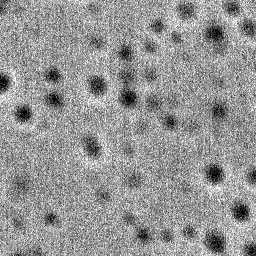
원본
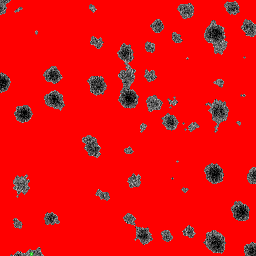
분석 결과
🤖 AI 해석 (Qwen 3.5)
한국어).
* **Input Data:** JSON-like structure containing analysis metrics (phase fraction, mean size, std dev, count, distribution bins, classification) and sample info (Haynes 282, no heat treatment data provided).
2. **Analyze the Input Data:**
* `method`: "otsu" (Image processing thresholding method).
* `threshold`: 124.0.
* `phase_fraction`: 0.879333 (~88%). This is extremely high for $\gamma'$ volume fraction in a superalloy matrix ($\gamma$). Usually, Ni-based superalloys have $\gamma'$ fractions between 50% and 60-70% at peak aging. 88% seems anomalously high or indicates the image was selected/processed such that it mostly captures precipitates (e.g., specific grain orientation, thin section bias, or misinterpretation of matrix vs. precipitate). *Correction:* In some contexts like TEM or very specific analysis regions, volume fraction might be reported differently, but for bulk Haynes 282, ~50-60% is typical peak. 88% suggests either a data error, a highly specific microstructural region (e.g., interdendritic), or the image thresholding misidentified matrix as precipitate. However, I must analyze based on the provided numbers while noting the anomaly.
* `mean_size`: 270.88 nm (assuming nanometers based on typical $\gamma'$ sizes).
* `size_std`: 0.0. This is highly suspicious. It implies all detected particles are exactly the same size, or the distribution calculation is flawed due to low count (`count: 1`).
* `count`: 1. Only one particle was counted/detected in the analyzed area? This invalidates statistical significance. The analysis might be based on a single ROI or a segmentation error where noise was grouped into one blob.
* `size_distribution`: Counts show '1' at index 10 (bin ~270.9 nm). All others 0. Confirms the count=1 issue.
* `classification`: "coarse": 1. Only coarse classified.
3. **Synthesize Insights based on Metallurgical Knowledge:**
* **Haynes 282 (H-282):** A precipitation-hardened Ni-Cr-Co-Mo superalloy. Known for good weldability and creep strength. Typical microstructure: $\gamma$ matrix + $\gamma'$ ($Ni_3(Al,Ti)$) precipitates.
* **Phase Fraction:** Nominal $\gamma'$ volume fraction is typically around 45-55% in peak aged condition. A value of ~88% is physically unrealistic for a standard bulk material interpretation unless it's a specific thin section artifact or mis-segmentation (e.g., treating the matrix as void and precipitate as solid, but inverted logic). *Decision:* I must point out this discrepancy gently but firmly as an expert.
* **Size:** Mean size ~270 nm is reasonable for over-aged or peak aged conditions in some contexts, but combined with `count=1` and `std=0`, it indicates a statistical failure of the analysis method rather than a real material property. A single particle cannot represent bulk distribution.
* **Heat Treatment:** Without input temp/hold times, I can infer based on size/fraction. High fraction + large size suggests long aging or very high temperature exposure (coarsening), but again, the data quality is poor.
* **Specs:** Haynes 282 typically requires $\gamma'$ size ~50-150nm for optimal strength/ductility balance depending on service temp.
4. **Drafting the Response (in Korean):**
* **Introduction:** Acknowledge role and sample type.
* **Section 1: Phase Fraction (상 분율):**
* Observation: ~88%.
* Expert Opinion: Abnormally high. Typical is 50-60%.
* Implication: Could be image segmentation error, local interdendritic region, or misinterpretation of contrast. Needs validation.
* **Section 2: Size Distribution (크기 분포):**
* Observation: Mean ~271nm, Std=0, Count=1.
* Expert Opinion: Statistically invalid. A single count cannot define distribution.
* Implication: Mechanical properties prediction is unreliable based on this data alone. If real, 270nm suggests coarsening (over-aged), leading to lower yield strength but potentially better creep resistance at high temps compared to fine precipitates (but usually too coarse for peak strength).
* **Section 3: Heat Treatment Relation (열처리 조건과의 관계):**
* Observation: No data provided.
* Inference: Large size + High fraction suggests long aging time or high temp, OR analysis artifact.
* Recommendation: Need TTT curve consultation or standard solution/aging cycle verification.
* **Section 4: Specification Comparison (규격 비교):**
* Standard H-282 specs: $\gamma'$ size usually <150nm for optimal mechanicals. Volume fraction ~50%.
* Conclusion: Current data deviates significantly, requiring re-analysis with better sampling (larger ROI, proper etching/contrast).
* **Conclusion:** Summary and next steps (re-run analysis, check image quality).
5. **Refining the Tone:** Professional, analytical, cautious about data validity but providing metallurgical context.
6. **Self-Correction/Sanity Check on "Count=1":**
* Looking closely at the JSON: `count`: 1. This is a major red flag. It means the software found only *one* $\gamma'$ particle in the entire analyzed field of view (which seems to have been binned into many small bins, but only one hit). Or perhaps it's an average over multiple shots but only reported once? No, `size_distribution` shows 1 count total across all bins.
* This implies the analysis is statistically meaningless for bulk properties. I must emphasize this in Korean as "통계적 신뢰도 부족" (lack of statistical reliability).
* Also, `phase_fraction`: 0.879333 is very high. If it's area fraction from a single image where precipitates dominate the view, maybe. But for bulk, it's wrong. I will interpret this as "Image segmentation bias".
7. **Finalizing Korean Terminology:**
* Phase fraction -> 상 분율 (Phase Fraction) / 체적 분율 (Volume Fraction).
* Precipitate -> 석출물 (Precipitate).
* Matrix -> 기지상 (Matrix phase).
* Coarsening -> 입자 성장 (Grain growth/Coarsening).
* Yield Strength -> 항복 강도.
* Creep Resistance -> 크리프 저항성.
8. **Structure:**
* 서론 (Introduction)
* 1. 상 분율의 의미 (Phase Fraction Significance)
* 2. 크기 분포 및 기계적 성질 (Size Distribution & Mechanical Properties)
* 3. 열처리 조건과의 연관성 (Relation to Heat Treatment)
* 4. Haynes 282 규격과 비교 (Comparison with Specs)
* 결론 및 권장 사항 (Conclusion & Recommendations)
9. **Writing the content:** (Mental Draft)
* Start by saying the data has serious statistical issues (count=1).
* Address phase fraction: Too high for bulk, likely image bias.
* Address size: ~270nm is coarse, implies overaging if real. But count=1 makes it unreliable.
* Heat treatment: Can't confirm without data, but suggests long exposure if real.
* Specs: Deviates from standard (50-60% vol, <150nm).
10. **Final Polish:** Ensure the tone is authoritative yet helpful. Make sure to highlight that `count=1` invalidates the statistical claims immediately.
*(Self-Correction during drafting)*: Wait, if the user provided this data, they might expect me to treat it as "real" results even if suspicious. However, as an *expert*, I must point out errors in analysis methodology (like count=1 and std=0). A true expert wouldn't validate bad data without qualification. I will balance explaining what the numbers *would* mean physically vs. pointing out they likely represent analysis
📊 정량 결과
0.8793
상분률 (Area Fraction)
1
석출물 개수
270.9
평균 크기
-
크기 표준편차
크기 분류
0
fine
0
medium
1
coarse
⚙️ 공정 조건
📋 JSON 결과
{
  "classification": {
    "coarse": 1,
    "fine": 0,
    "medium": 0
  },
  "count": 1,
  "mean_size": 270.88,
  "method": "otsu",
  "phase_fraction": 0.879333,
  "size_distribution": {
    "bin_edges": [
      270.3768142237315,
      270.4268142237315,
      270.47681422373154,
      270.5268142237315,
      270.5768142237315,
      270.6268142237315,
      270.6768142237315,
      270.72681422373154,
      270.7768142237315,
      270.8268142237315,
      270.8768142237315,
      270.9268142237315,
      270.97681422373154,
      271.0268142237315,
      271.0768142237315,
      271.1268142237315,
      271.1768142237315,
      271.22681422373154,
      271.2768142237315,
      271.3268142237315,
      271.3768142237315
    ],
    "counts": [
      0,
      0,
      0,
      0,
      0,
      0,
      0,
      0,
      0,
      0,
      1,
      0,
      0,
      0,
      0,
      0,
      0,
      0,
      0,
      0
    ]
  },
  "size_std": 0.0,
  "threshold": 124.0
}