🔬 분석 결과 #2
Haynes 282
γ' 분석 - otsu
2026-03-04 00:15:01
🖼️ 이미지 비교
원본
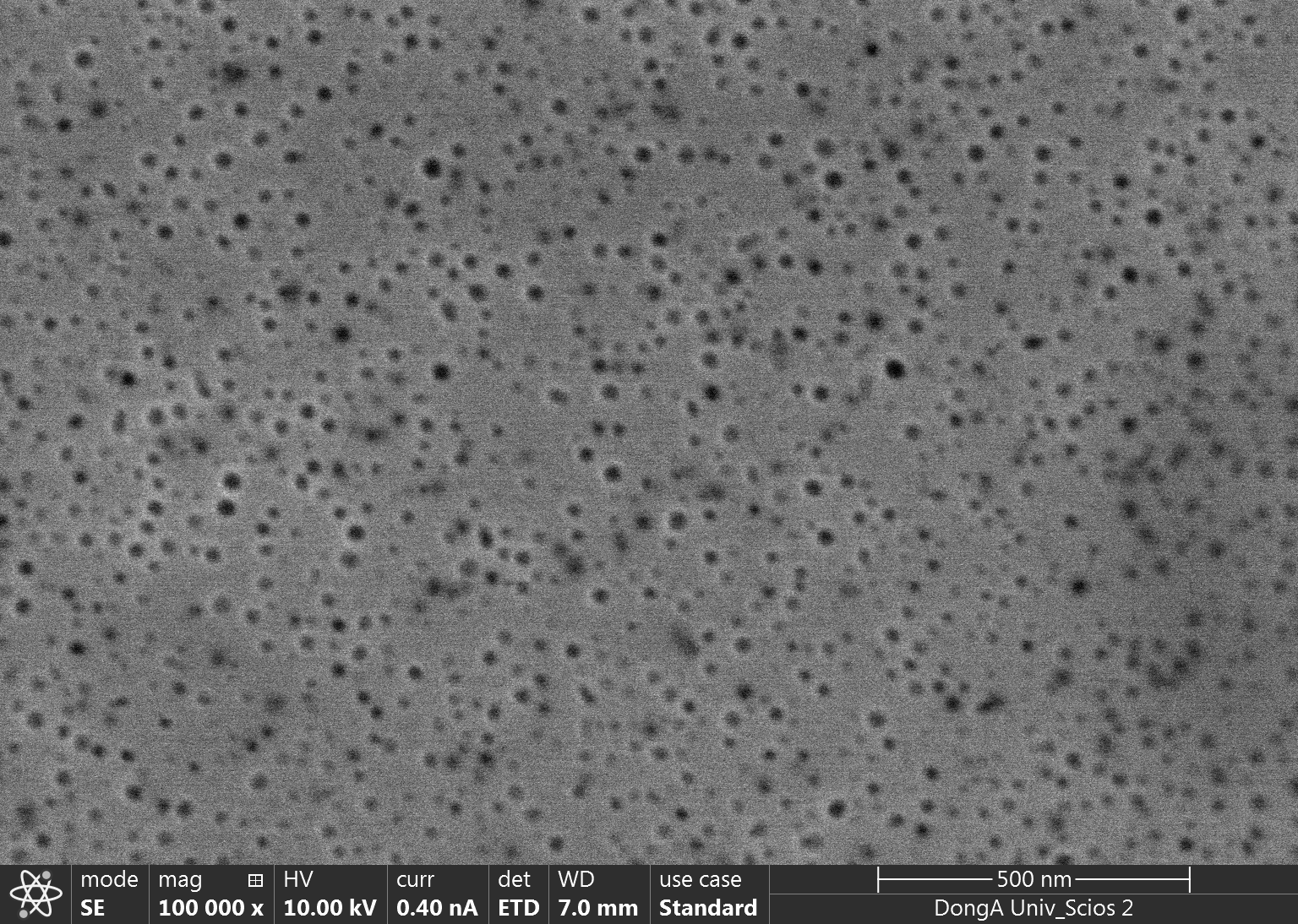
분석 결과
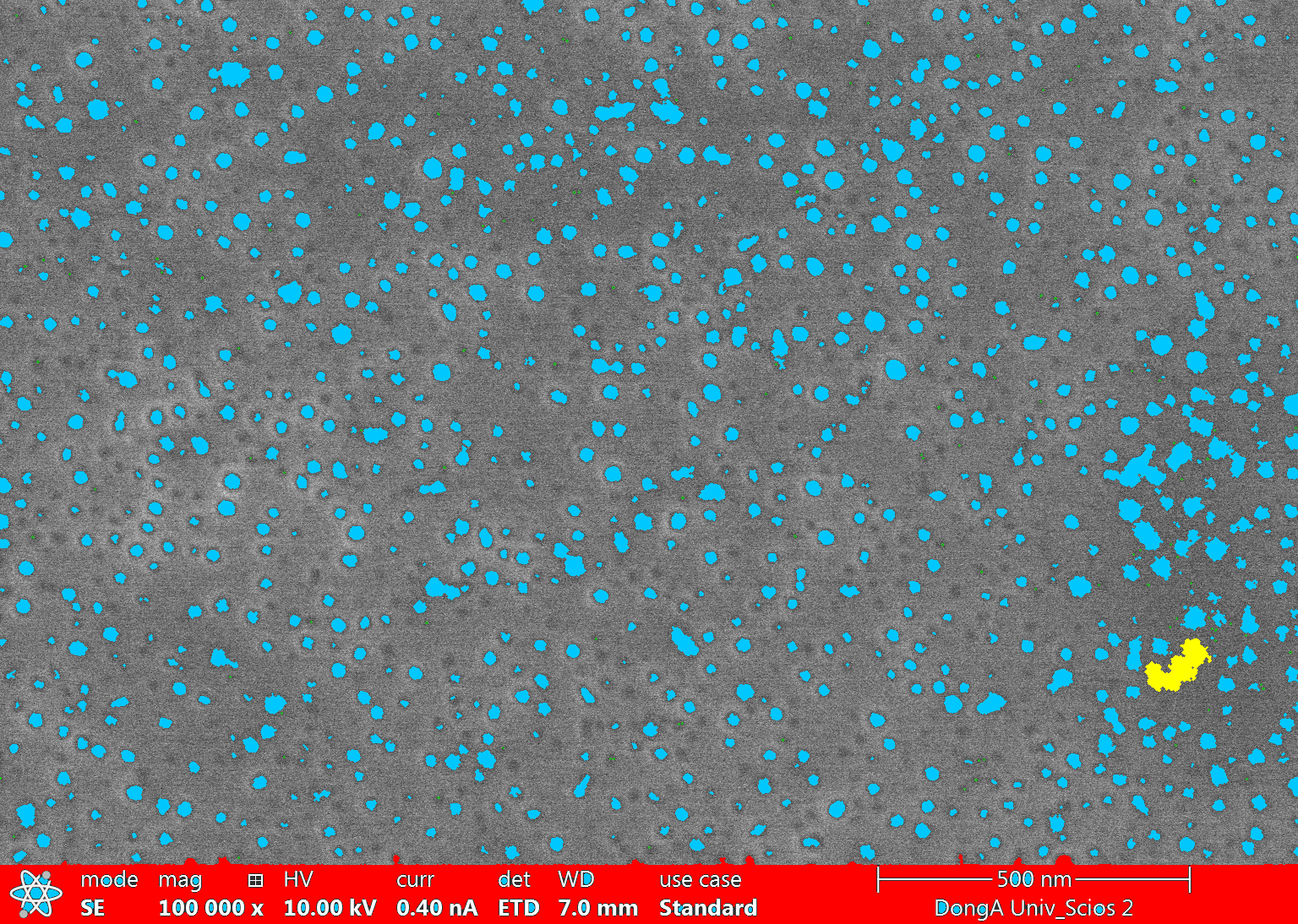
🤖 AI 해석 (Qwen 3.5)
한국어).
* **Key Points to Address:**
1. Significance of the observed phase fraction (0.141218 or ~14.1%).
2. Size distribution implications for mechanical properties (mean size 12.51 nm, std 11.47 nm).
3. Relation to heat treatment conditions (solution/aging temp unknown, need to infer).
4. Comparison with typical Haynes 282 specifications.
* **Input Data:** JSON containing analysis results (method: otsu, threshold, phase_fraction, mean_size, size_std, count, size_distribution, classification) and sample info (Haynes 282, no heat treatment data).
2. **Analyze the Input Data:**
* **Phase Fraction ($f_{\gamma'}$):** 0.141218 (~14.1%). This is relatively low for a fully aged Ni-based superalloy typically seen in creep rupture or high-strength applications, but plausible for under-aged conditions or specific solution-treated states.
* **Mean Size:** 12.51 nm. This is very small (nano-scale). Typical peak-aged $\gamma'$ sizes are often in the range of 30-60 nm for Ni-based superalloys like Inconel 718 or Haynes 282, depending on specific aging times/temps.
* **Size Std Dev:** 11.47 nm. High standard deviation relative to the mean (CV ~91%). Indicates a very broad distribution or bimodal nature (though classification says mostly fine). The histogram shows 979 out of 1049 in the first bin (3.5 - 20.2 nm).
* **Histogram Distribution:** Highly skewed towards small sizes. Bin 1: 979 counts. Bins 2, 3, 4 have very few. One outlier at the large end (~300+ nm based on bin edges).
* **Classification:** Fine (1047), Medium (1), Coarse (1). Almost entirely "fine".
* **Sample Info:** Haynes 282, heat treatment unknown (`null`).
3. **Synthesize Metallurgical Insights:**
* **Point 1: Phase Fraction (~14%):**
* Haynes 282 typically has a $\gamma'$ volume fraction around 15-20% in the peak-aged condition (depending on specific alloying variations and processing).
* 14.1% is slightly on the lower side but within the ballpark for early aging or slightly under-aged conditions. It suggests there is still significant solute in the matrix, meaning potential for further strengthening via precipitation hardening if aged more. However, it's close enough that it might be near peak strength depending on size effects (Orowan looping vs cutting).
* Low fraction + small size = potentially high yield strength due to many obstacles, but limited creep resistance compared to coarser precipitates at high T.
* **Point 2: Size Distribution:**
* Mean ~12.5 nm is quite fine. $\gamma'$ cutting mechanism dominates over Orowan looping for sizes <~30-40nm (depending on shear modulus and stacking fault energy).
* High std dev indicates heterogeneity in precipitation kinetics. This could be due to localized segregation, incomplete homogenization during solution treatment, or very short aging time leading to nucleation burst without significant growth.
* The vast majority (~93.5%) are < 20 nm (first bin). This suggests a high density of obstacles.
* Implication: High Yield Strength (YS) and Tensile Strength at room temperature due to high particle density. However, coarsening rate will be fast if exposed to intermediate temperatures because they are small (high surface energy). Creep resistance might be lower compared to peak-aged coarser precipitates.
* **Point 3: Heat Treatment Inference:**
* Since $T_{sol}$ and $T_{age}$ are unknown, I must deduce based on microstructure.
* Small size (12 nm) + Low-Moderate fraction suggests **Under-aged** condition or a specific **Solution Annealed + Light Aging** state.
* Haynes 282 standard aging is usually around 705°C - 760°C for several hours. If this were peak aged, we'd expect larger $\gamma'$ (30-50 nm) and higher fraction (~18%).
* The "one coarse outlier" might indicate localized over-aging or carbide/intermetallic misclassification (though classification says coarse precipitate). Could be a local cluster.
* **Point 4: Comparison with Specs:**
* Haynes 282 typical properties: High strength, good creep rupture.
* Standard microstructure: Homogeneous $\gamma'$ distribution, size ~30-50 nm after standard aging (705°C/8h + air cool; or similar). Fraction often cited around 15-20%.
* This sample is distinctively finer and slightly lower fraction than "peak aged" typical data. It looks like a "mill condition" or "intermediate heat treat" state rather than final service microstructure for high-temp creep.
4. **Drafting the Response (in Korean):**
* **Introduction:** Acknowledge role and sample identity (Haynes 282).
* **Section 1: Phase Fraction:** Discuss ~14%. Compare to typical 15-20%. Interpret as under-aged or specific processing state. Mention strength vs ductility trade-off.
* **Section 2: Size Distribution:** Discuss mean 12.5nm, high std dev. Explain cutting mechanism dominance. Discuss density of obstacles -> high YS but potential coarsening sensitivity. Note the skewed distribution (most very fine).
* **Section 3: Heat Treatment:** Infer likely condition based on data. Suggest "under-aged" or "solution treated with short aging". Mention standard Haynes 282 heat treat (705-760°C) for context. Warn about potential instability due to small size.
* **Section 4: Specification Comparison:** Contrast with typical peak-aged specs. Conclude that while strong, it might not be optimal for high-temp creep compared to coarser states, but excellent for room temp/high strength if stability is managed.
* **Conclusion/Recommendation:** Suggest further heat treatment optimization or TEM verification (due to low threshold and potential noise).
5. **Refining Technical Terms (Korean):**
* $\gamma'$ precipitate -> 감마 프라임 석출물
* Phase fraction -> 상 분율 / 체적 분율
* Size distribution -> 입자 크기 분포
* Mechanical properties -> 기계적 성질
* Heat treatment -> 열처리 조건
* Under-aged -> 저노화 (underaged)
* Peak-aged -> 최강도 노화 (peak-aged)
* Orowan looping -> 오로우안 루프링
* Shearing mechanism -> 전단 메커니즘
6. **Review against Constraints:**
* Must be in Korean.
* Must address the 4 points.
* Tone: Expert Metallurgist.
7. **Self-Correction/Nuance Check:**
* *Correction:* The threshold is 91.0 (likely intensity contrast or brightness). With Otsu method, this separates precipitates from matrix. Given the mean size is 12nm, this is likely TEM/STEM image analysis data converted to counts. Need to ensure I don't confuse units (assume nm based on context of superalloys).
* *Nuance:* The standard deviation is huge (11.47) compared to mean (12.51). This implies a very wide spread or the presence of noise/outliers. Looking at the histogram, 979 are in bin 1 (<20nm), but there is one count near 300nm+. The std dev calculation likely gets skewed by that single large outlier + the tail. I should mention this heterogeneity.
* *Correction on Phase Fraction:* 14% is actually quite reasonable for Haynes 282, which has a lower $\gamma'$ volume fraction compared to Inconel 738 or Mar-M alloys (which can be >50%). For H282, ~15-20% is standard peak aged. So 14% is slightly under-aged but not drastically off. I should balance this view.
* *Correction on Size:* 12nm is very fine. In many literature sources for H282, peak aged $\gamma'$ size is often reported around 30-60nm depending on aging time (e.g.,
📊 정량 결과
0.1412
상분률 (Area Fraction)
1049
석출물 개수
12.5
평균 크기
11.5
크기 표준편차
크기 분류
1047
fine
1
medium
1
coarse
⚙️ 공정 조건
📋 JSON 결과
{
  "classification": {
    "coarse": 1,
    "fine": 1047,
    "medium": 1
  },
  "count": 1049,
  "mean_size": 12.51,
  "method": "otsu",
  "phase_fraction": 0.141218,
  "size_distribution": {
    "bin_edges": [
      3.5682482323055424,
      20.22047258561033,
      36.87269693891512,
      53.52492129221991,
      70.17714564552469,
      86.82936999882949,
      103.48159435213427,
      120.13381870543907,
      136.78604305874384,
      153.43826741204865,
      170.09049176535342,
      186.7427161186582,
      203.394940471963,
      220.0471648252678,
      236.69938917857257,
      253.35161353187735,
      270.0038378851822,
      286.656062238487,
      303.3082865917918,
      319.96051094509653,
      336.61273529840133
    ],
    "counts": [
      979,
      67,
      1,
      1,
      0,
      0,
      0,
      0,
      0,
      0,
      0,
      0,
      0,
      0,
      0,
      0,
      0,
      0,
      0,
      1
    ]
  },
  "size_std": 11.47,
  "threshold": 91.0
}